Designer’s Toolkit
Classroom Installation
Overview
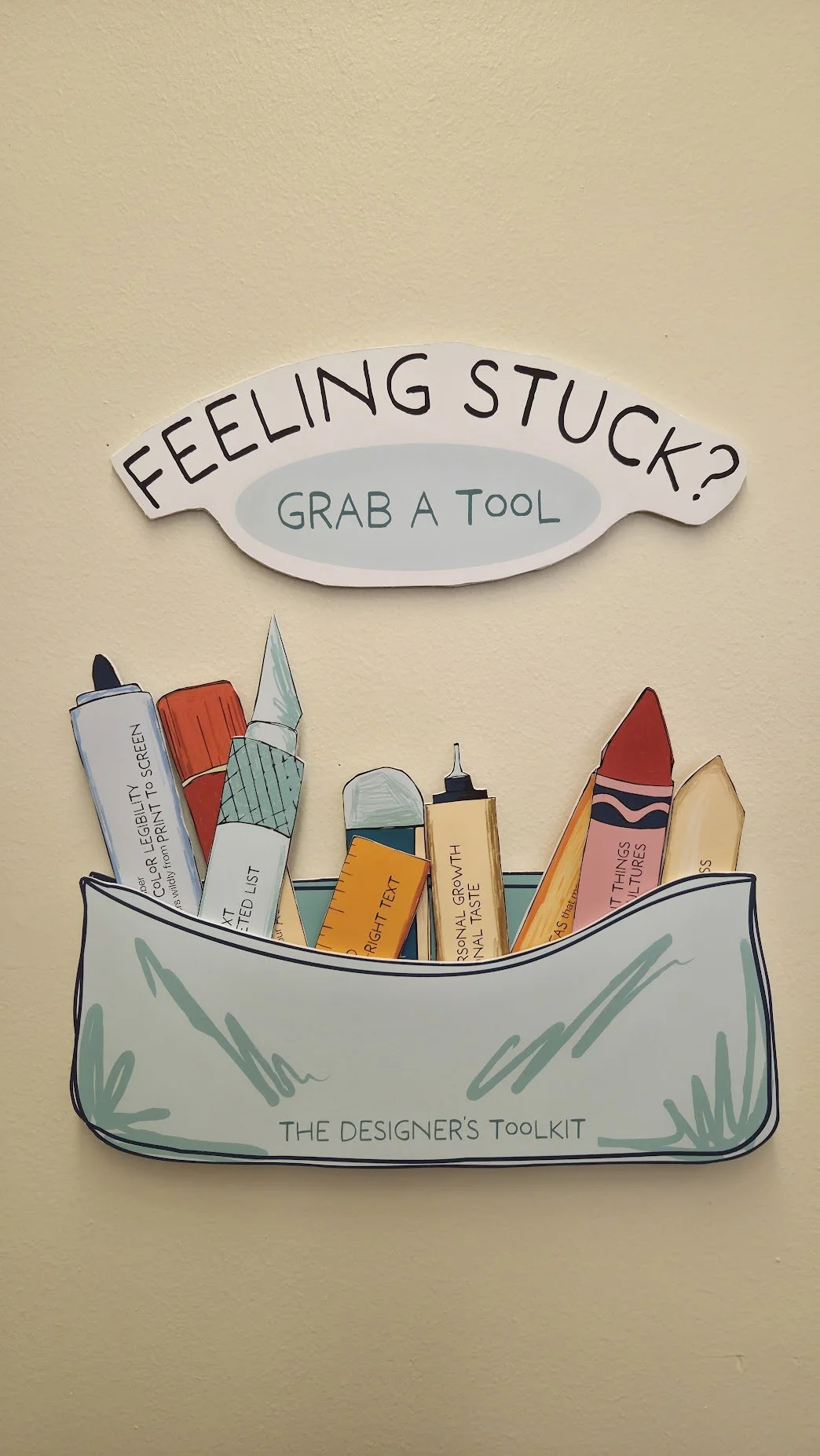
The Designer's Toolkit is an interactive educational installation created to support second-year Graphic Design students as they begin their first courses within the concentration. Working collaboratively in a team of three, we transformed nine foundational design principles into physical illustrated "tools" that students can remove, read, and reference whenever they feel creatively stuck. The installation turns design education into a playful, tactile experience while creating a resource that can continue supporting students throughout their time in the program.
The Problem
Beginning the Graphic Design concentration introduces students to a wide range of new principles, terminology, and expectations that can be difficult to remember while actively designing. Our challenge was to create an educational resource that would make foundational concepts approachable, memorable, and easy to revisit without feeling like another textbook or classroom handout.
-
Designer & Illustrator
-
Collaborative Academic Project
-
Three Designers
-
Cal Poly Art & Design
-
Four weeks
-
Illustrator | Analog Media | InDesign
-
Environmental Design | Illustration | Typography | Information Design | Fabrication | Collaborative Design
Goals
Reinforce foundational principles students can apply throughout the design process
Transform educational information into an interactive experience that encourages participation
Create a resource students can return to whenever they feel creatively stuck
Design an installation that can become part of the second-year Graphic Design experience for future cohorts.
The Concept
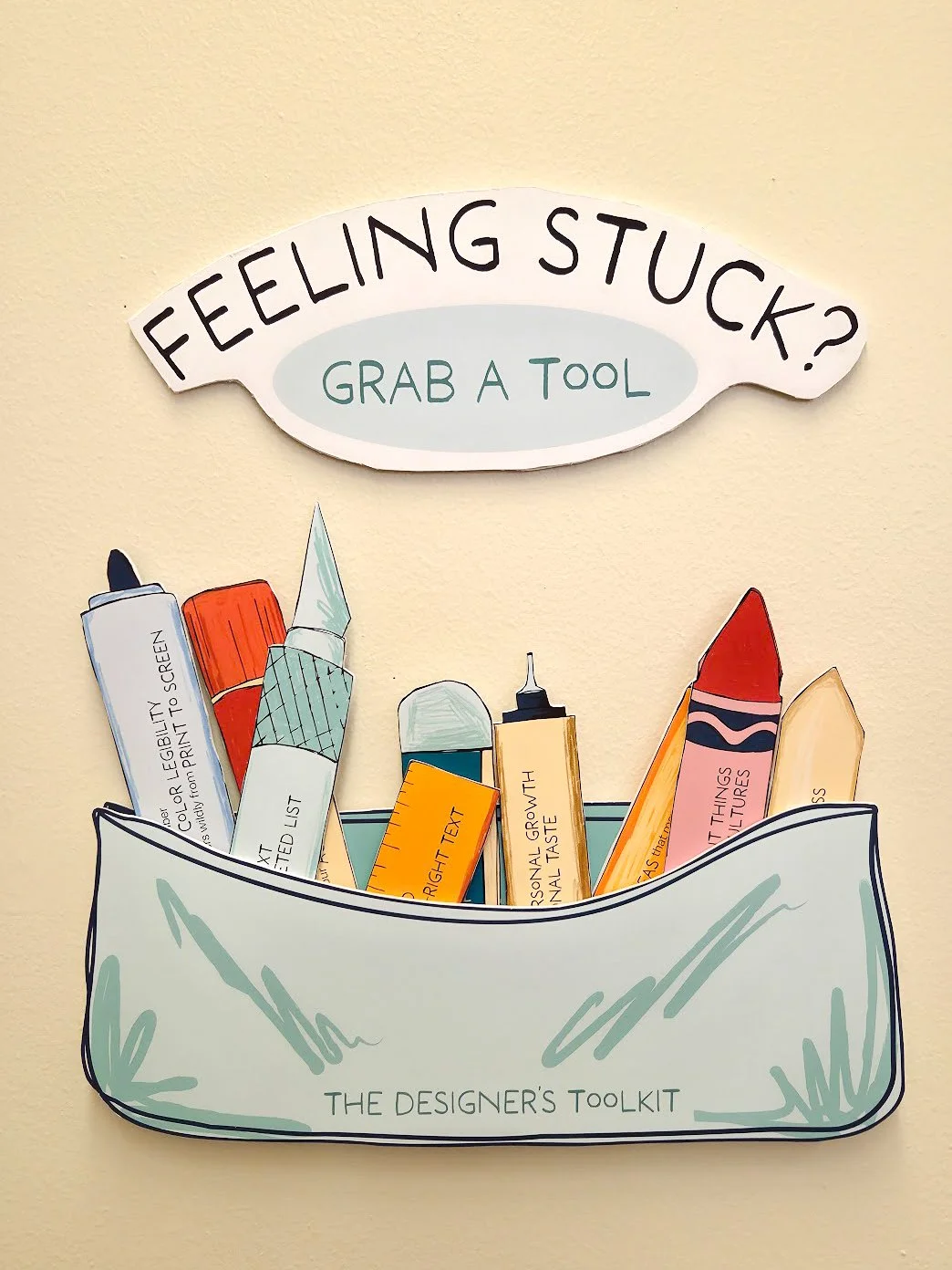
Feeling Stuck? Grab a Tool.
We approached each design principle as a metaphorical "tool" that students could add to their creative toolkit. Rather than presenting the information through traditional signage, each principle was transformed into an oversized illustrated art supply, including pencils, markers, crayons, rulers, and pens, that students could physically remove from the installation.
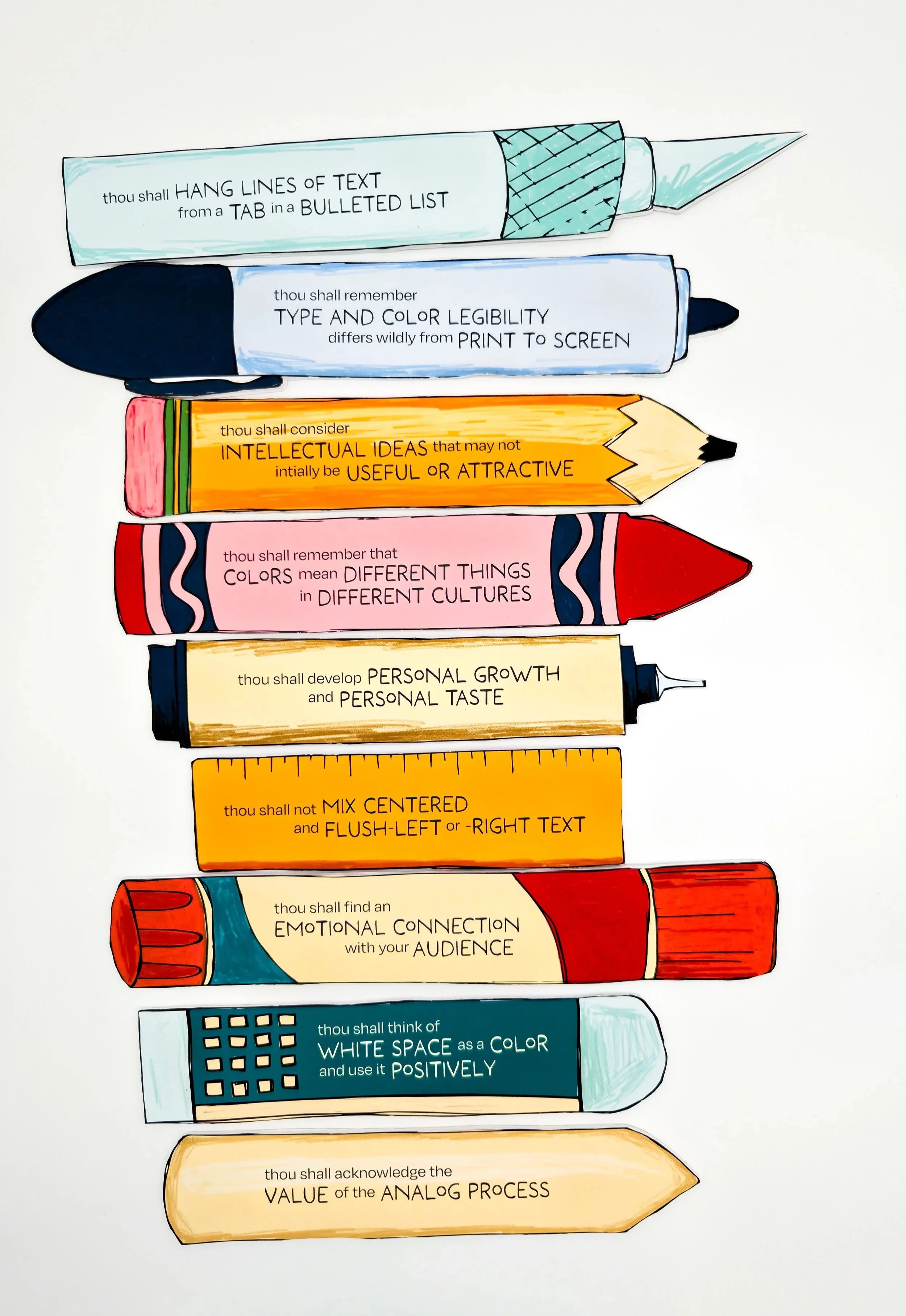
The Nine Tools
“Thou Shall…”
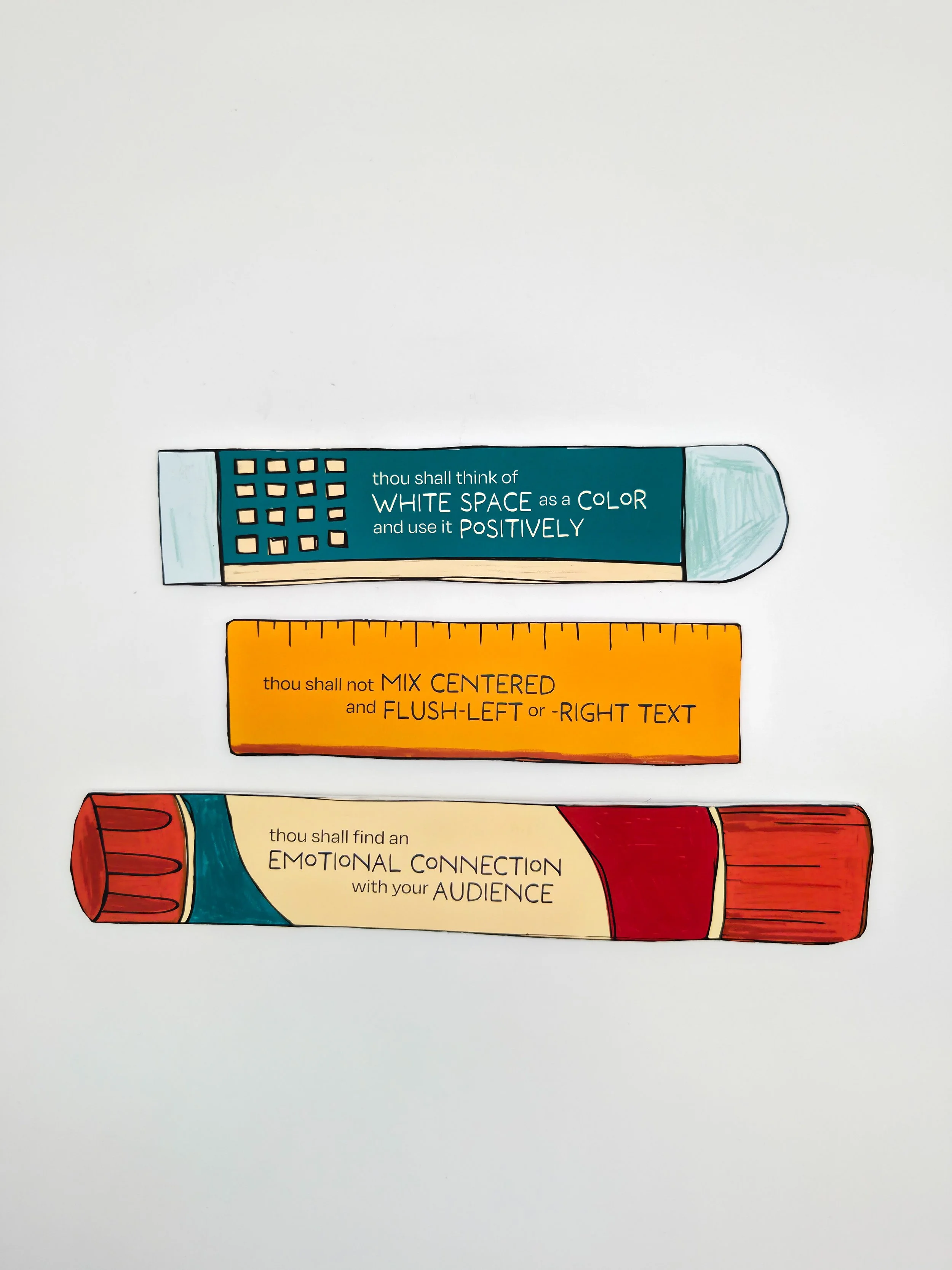
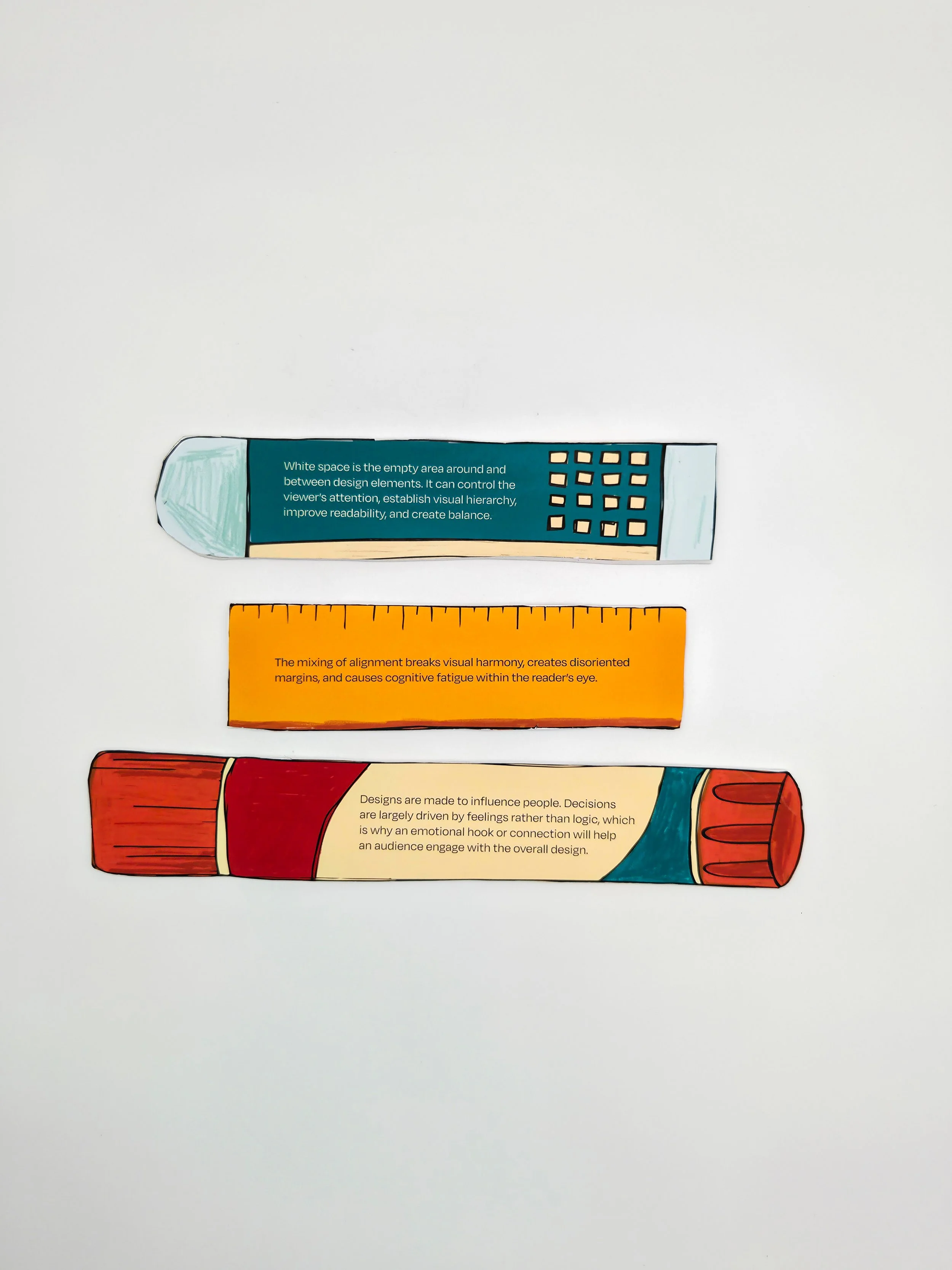
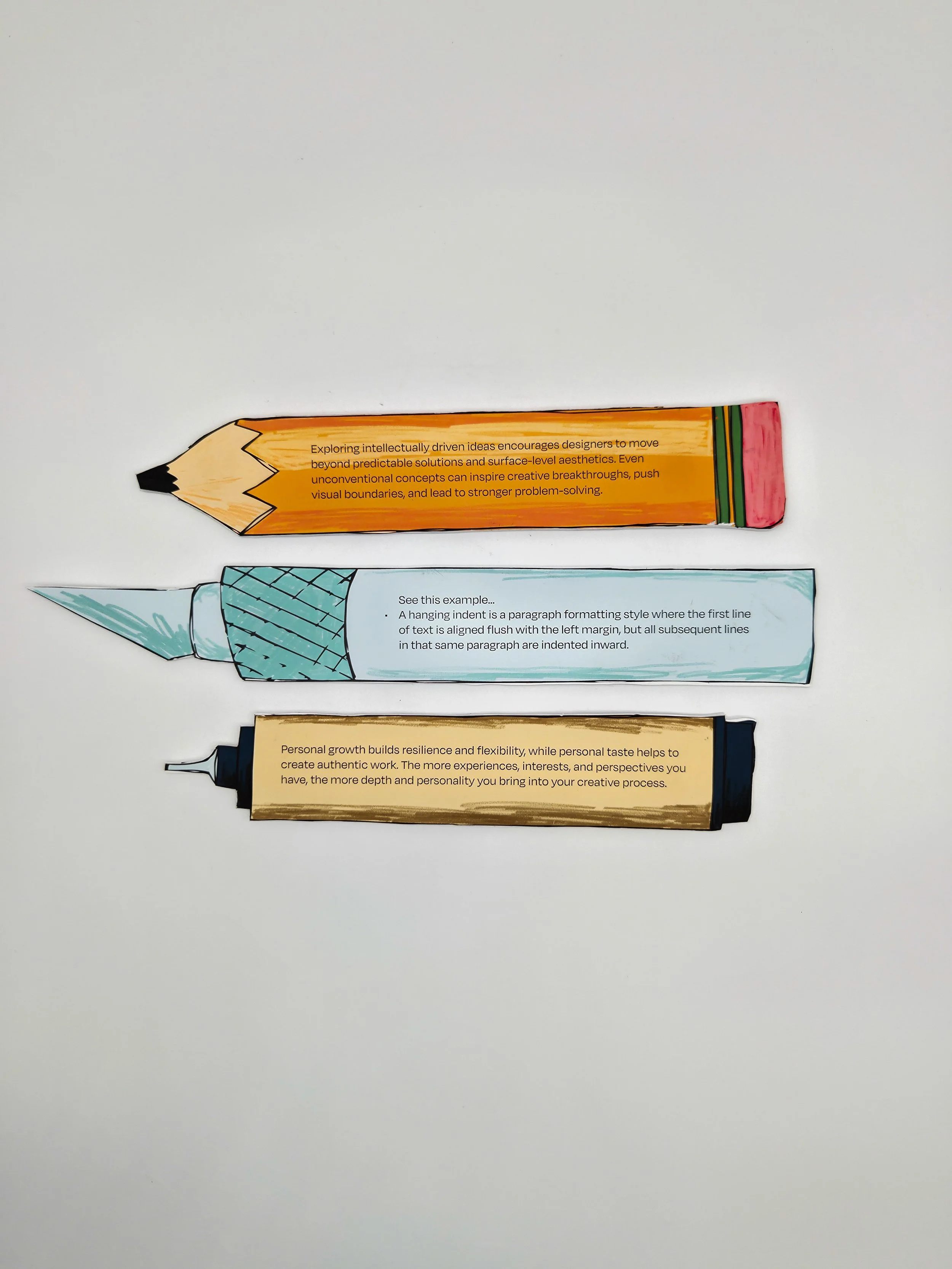
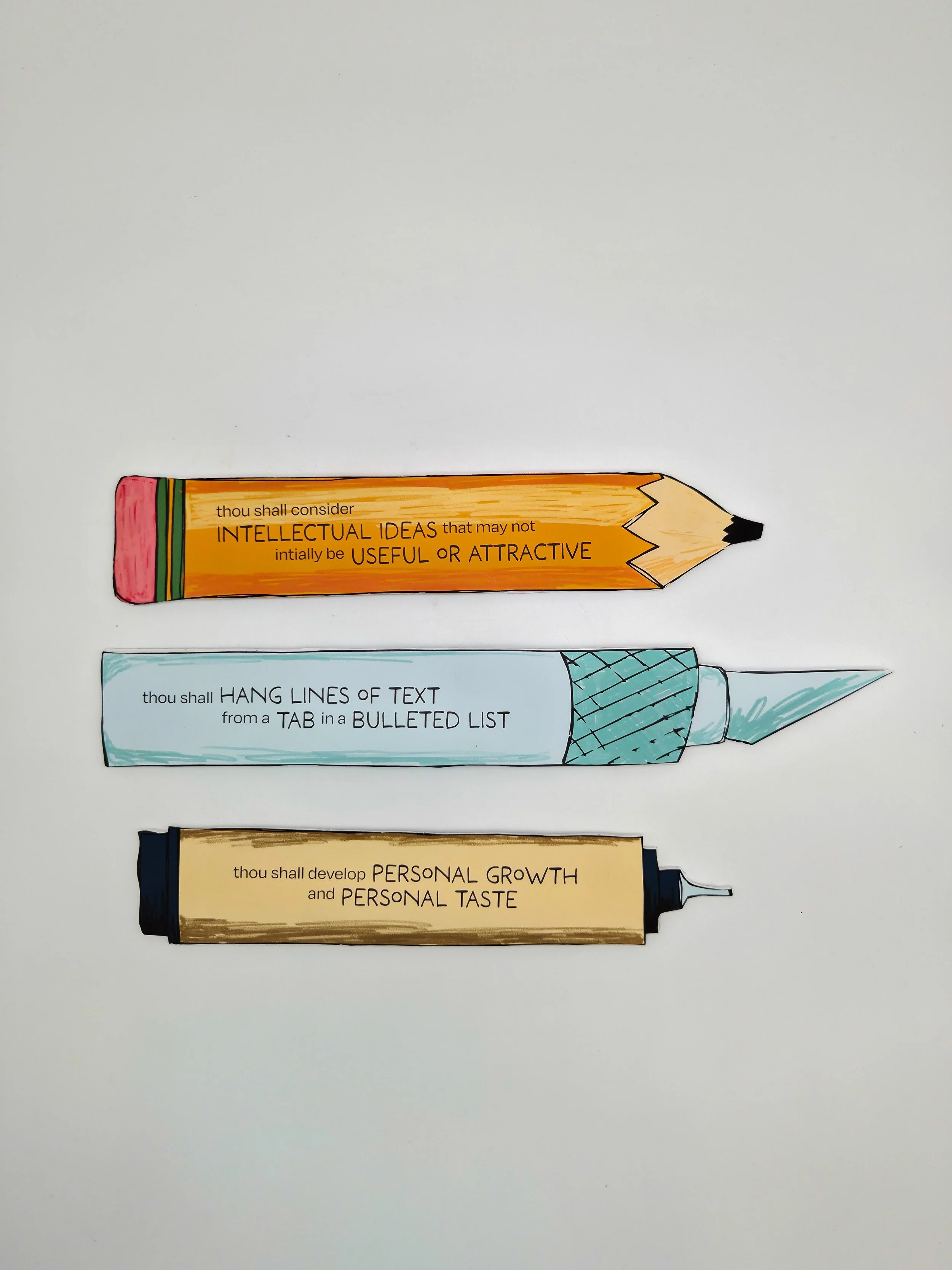
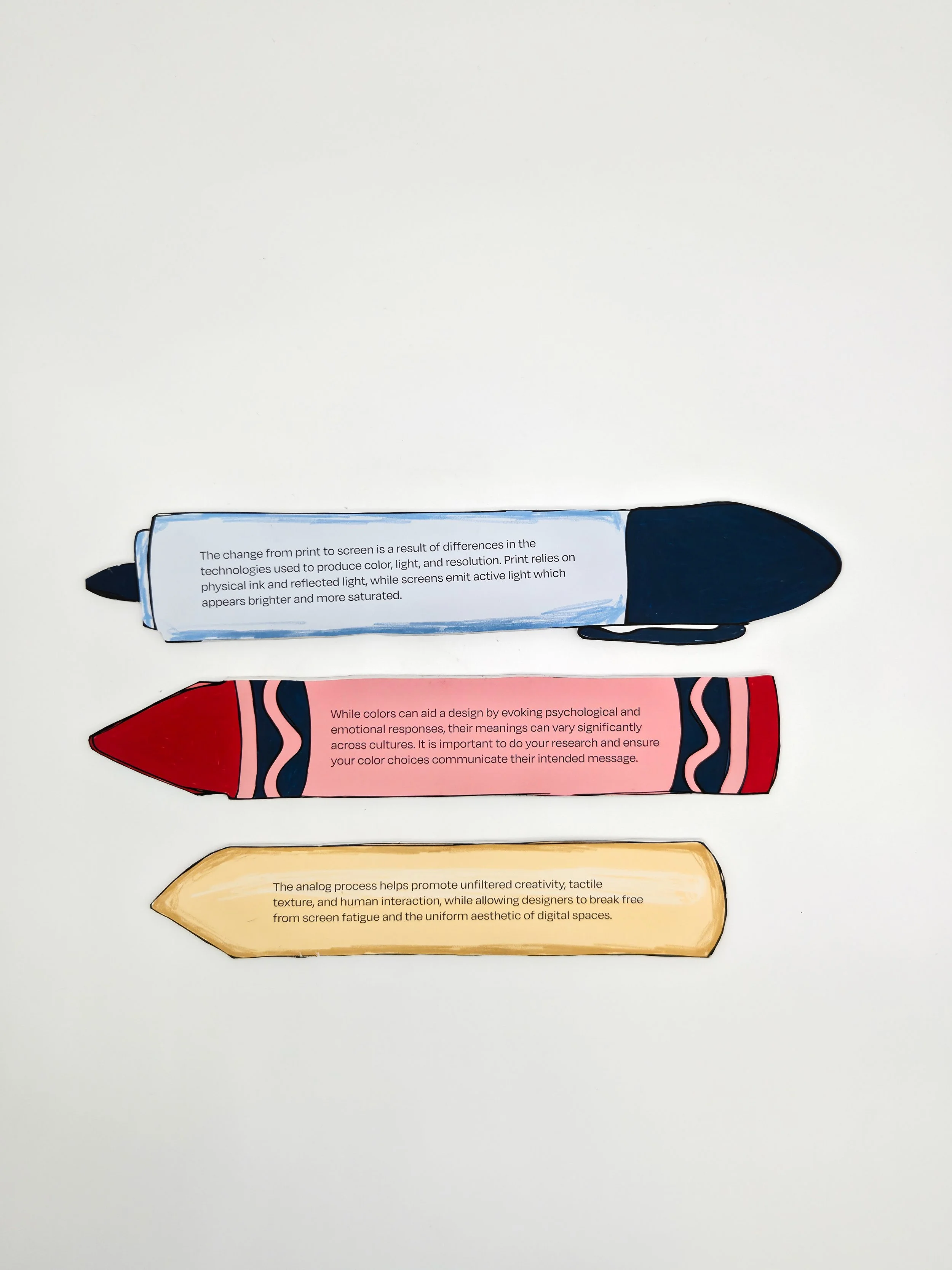
Each tool introduces a foundational principle on the front and expands upon its meaning on the back, allowing students to quickly reference a concept or explore it in greater depth.
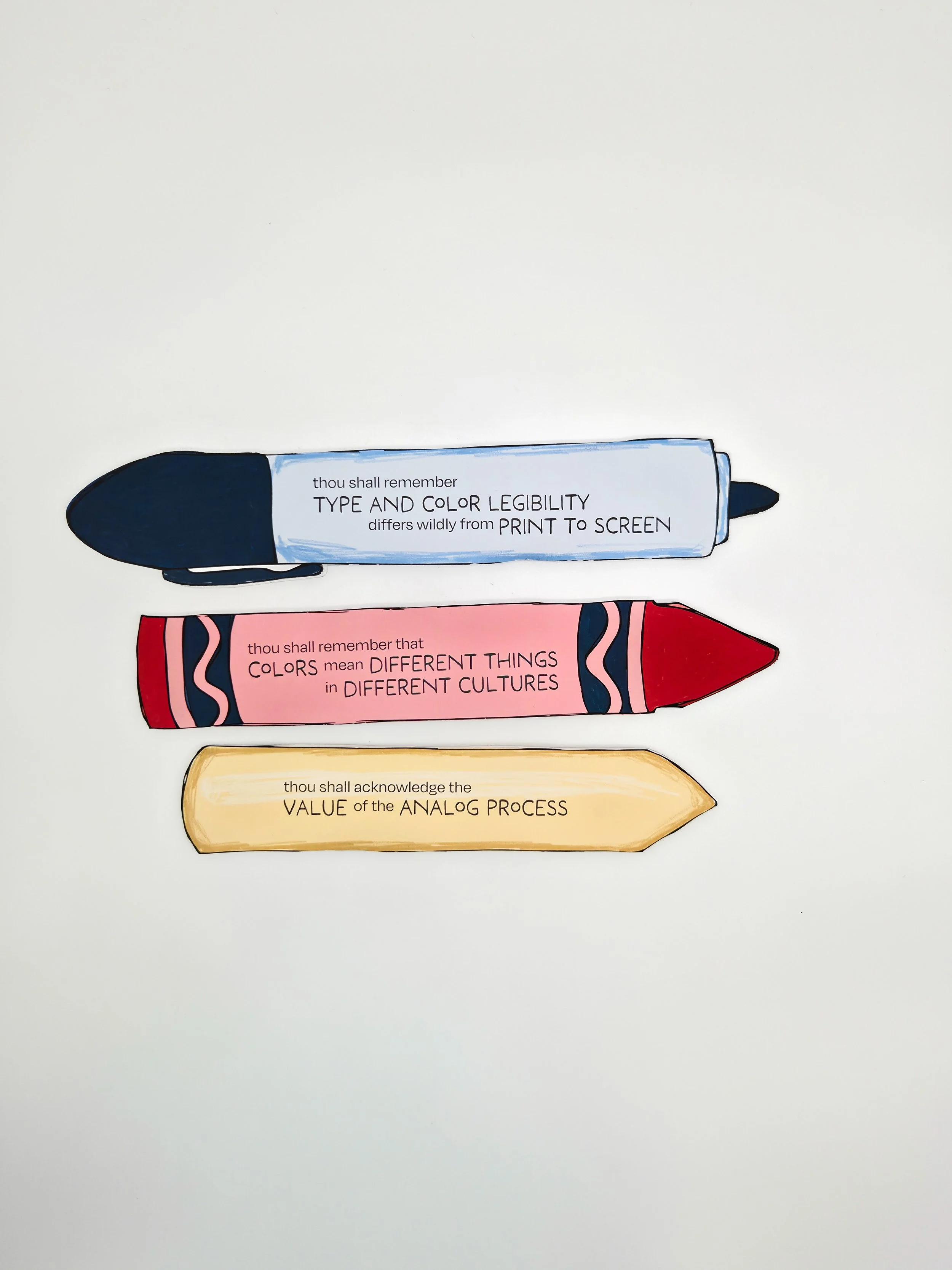
Information Design
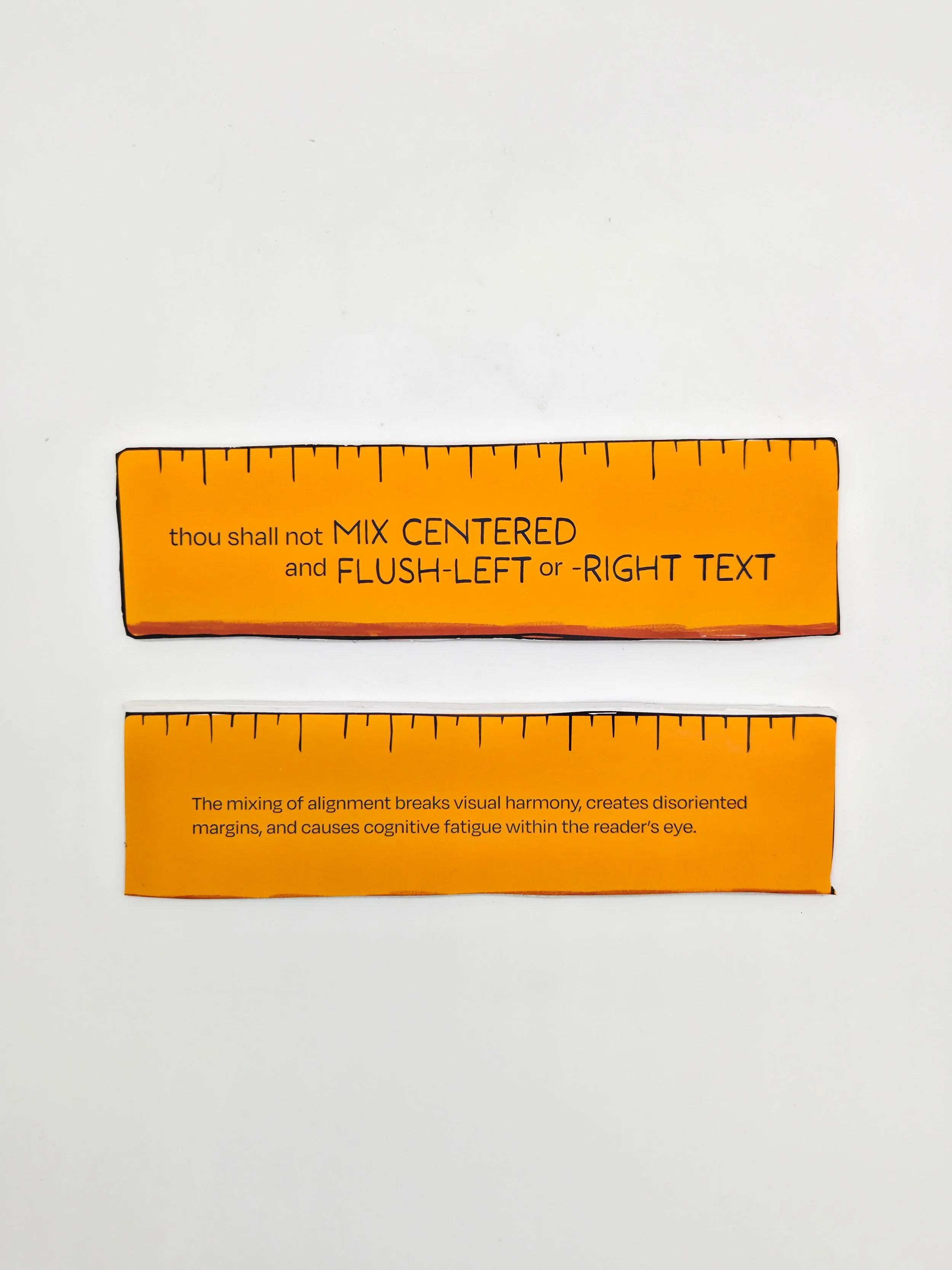
Designing Information at Two Levels
Each tool was designed to communicate at two levels. The front presents a short, memorable "commandment" that can be understood at a glance, while the reverse provides additional context explaining why the principle matters. This allowed the installation to remain playful and visually engaging while still functioning as an educational resource.
Front
A concise principle provides an easy reference when students need immediate guidance following the Thou Shall theme.
Back
Supporting information explains the reasoning behind the principle and encourages students to understand rather than simply memorize the rule.
Visual System
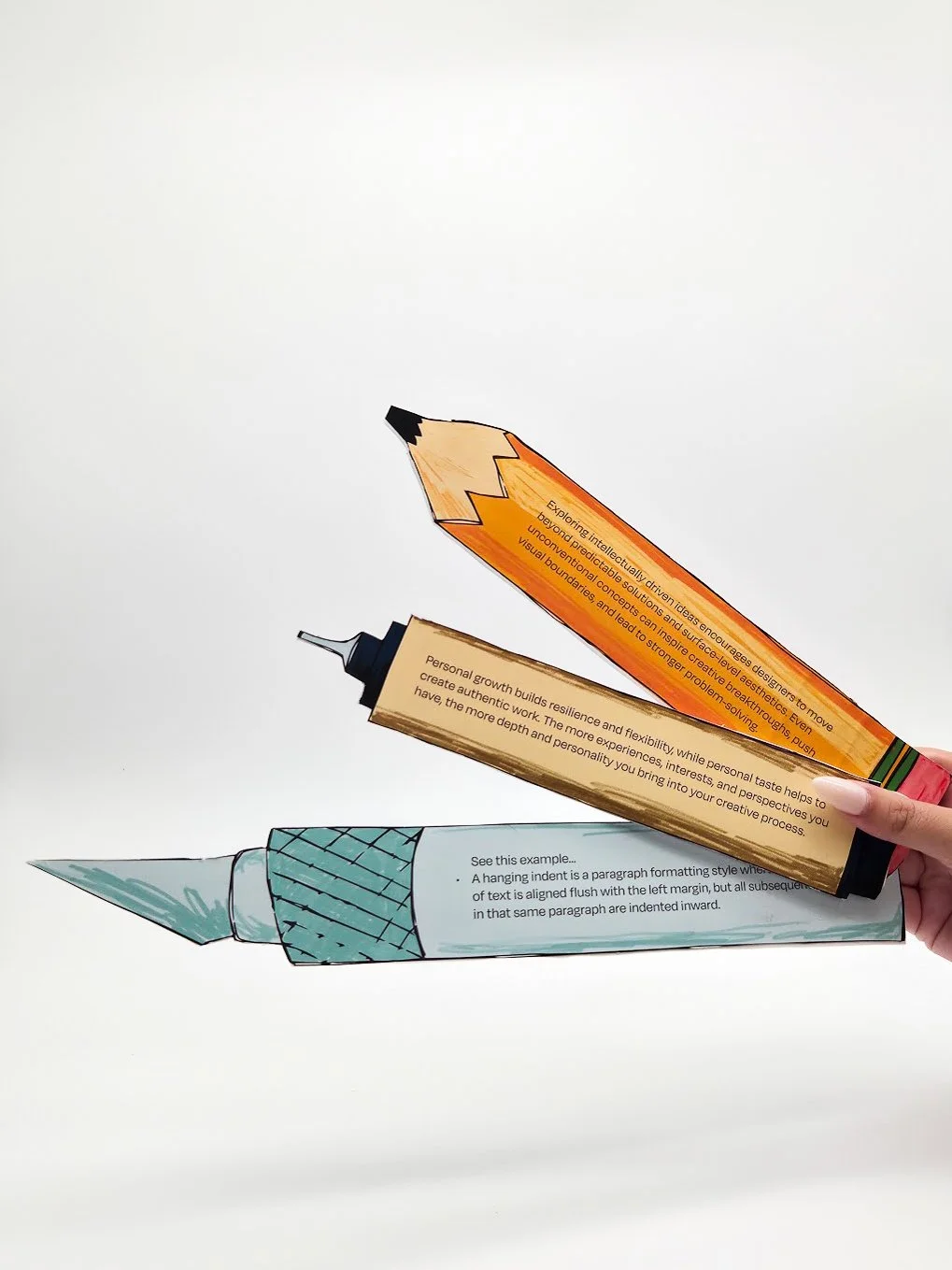
Approachable Design
Inspired by the supplies students interact with every day, the visual system uses hand-drawn forms, expressive color, and varied art tools to create an experience that feels familiar and inviting. Maintaining a consistent illustration style and typography connects the nine individual pieces into one cohesive installation while allowing each tool to maintain its own personality.
Interaction
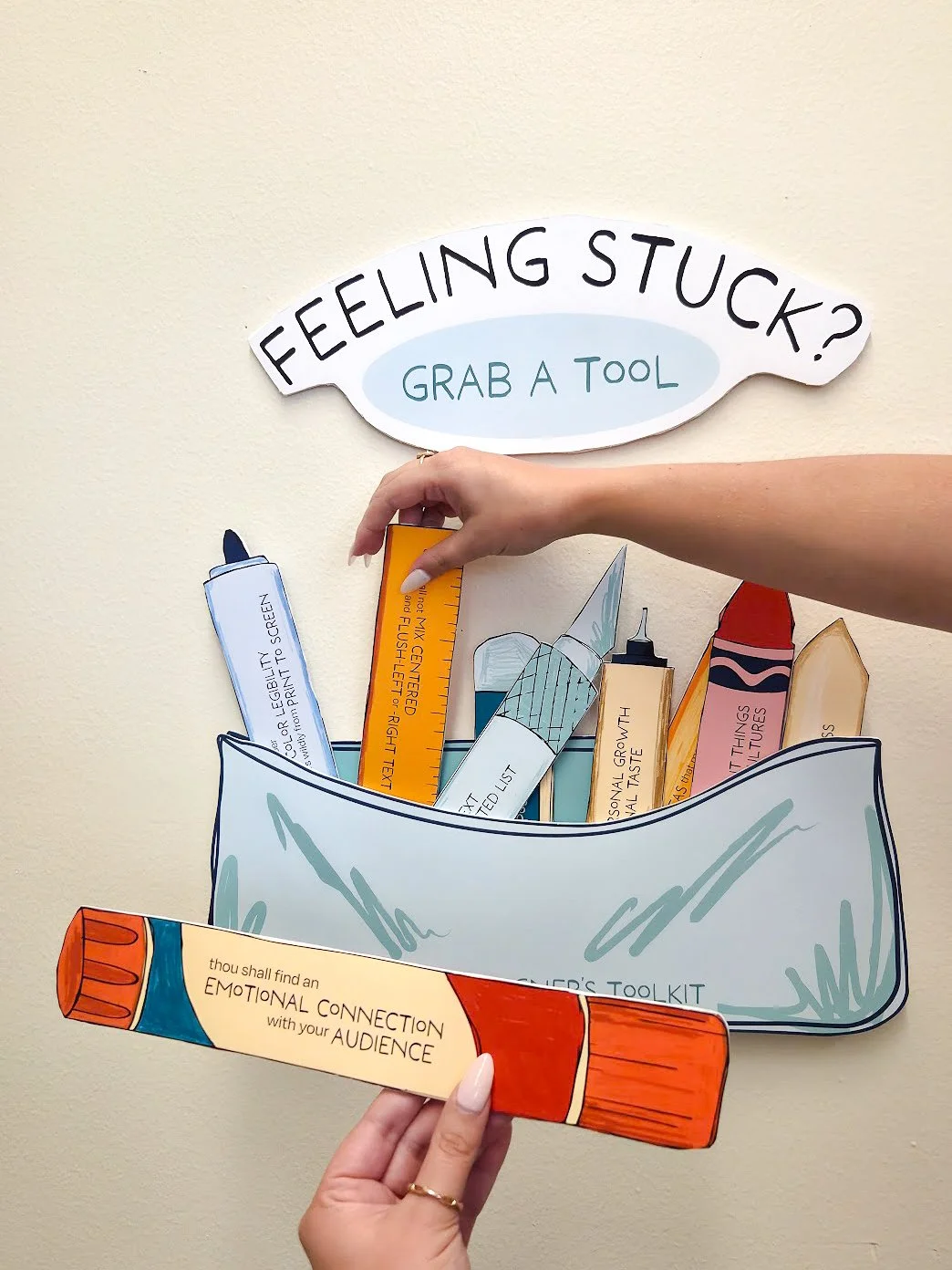
Interactive Installations
The installation was intentionally designed to be touched rather than simply viewed. When students feel stuck, they can physically "grab a tool," read the principle on the front, and turn it over for additional guidance. This interaction transforms a static classroom display into a resource students can actively use throughout their design education.
Environmental Installation
Classroom Experience
The final installation was placed within the Graphic Design classroom environment, allowing the resource to become part of the space where students actively learn and create. Its placement keeps the principles accessible while reinforcing the idea that these concepts are tools to be used, not simply rules to memorize.
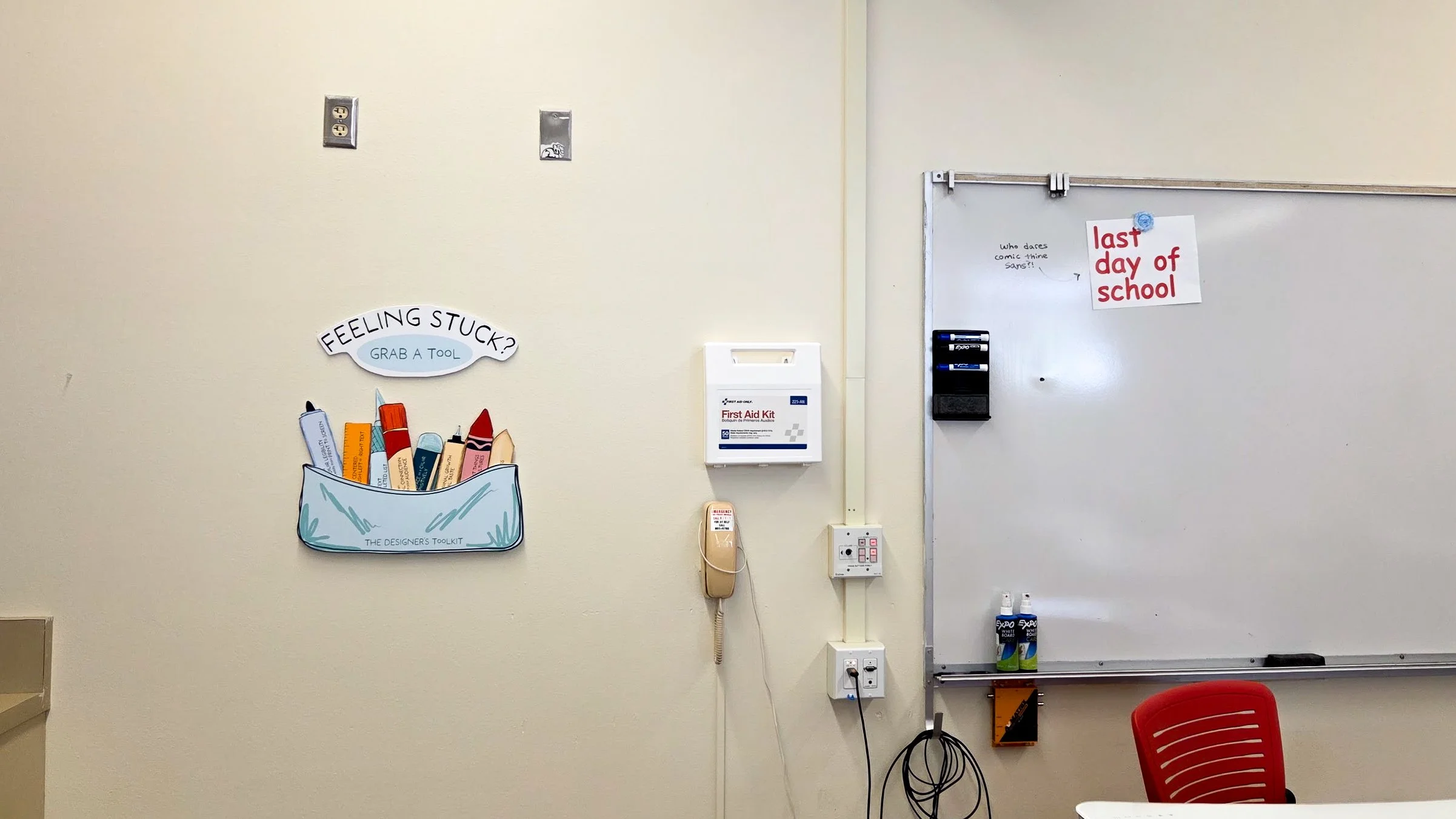
Working within a team of three required us to balance individual creative perspectives while maintaining a unified direction across the installation. We collaborated throughout concept development, content refinement, visual design, and fabrication, regularly reviewing one another's work to ensure all nine tools felt cohesive. The process strengthened my ability to communicate creative decisions, incorporate feedback, and contribute my individual strengths toward a shared design outcome.
Collaboration
My Role
As one of three designers, I helped shape both the educational content and visual direction of The Designer’s Toolkit. My contributions included developing the reasoning behind each of the nine design principles, selecting the color palette, identifying the art tools that would best represent the design process, establishing typography, and physically constructing the final installation. Throughout the project, I collaborated closely with my teammates to ensure each individual piece felt unique while remaining part of one cohesive system.
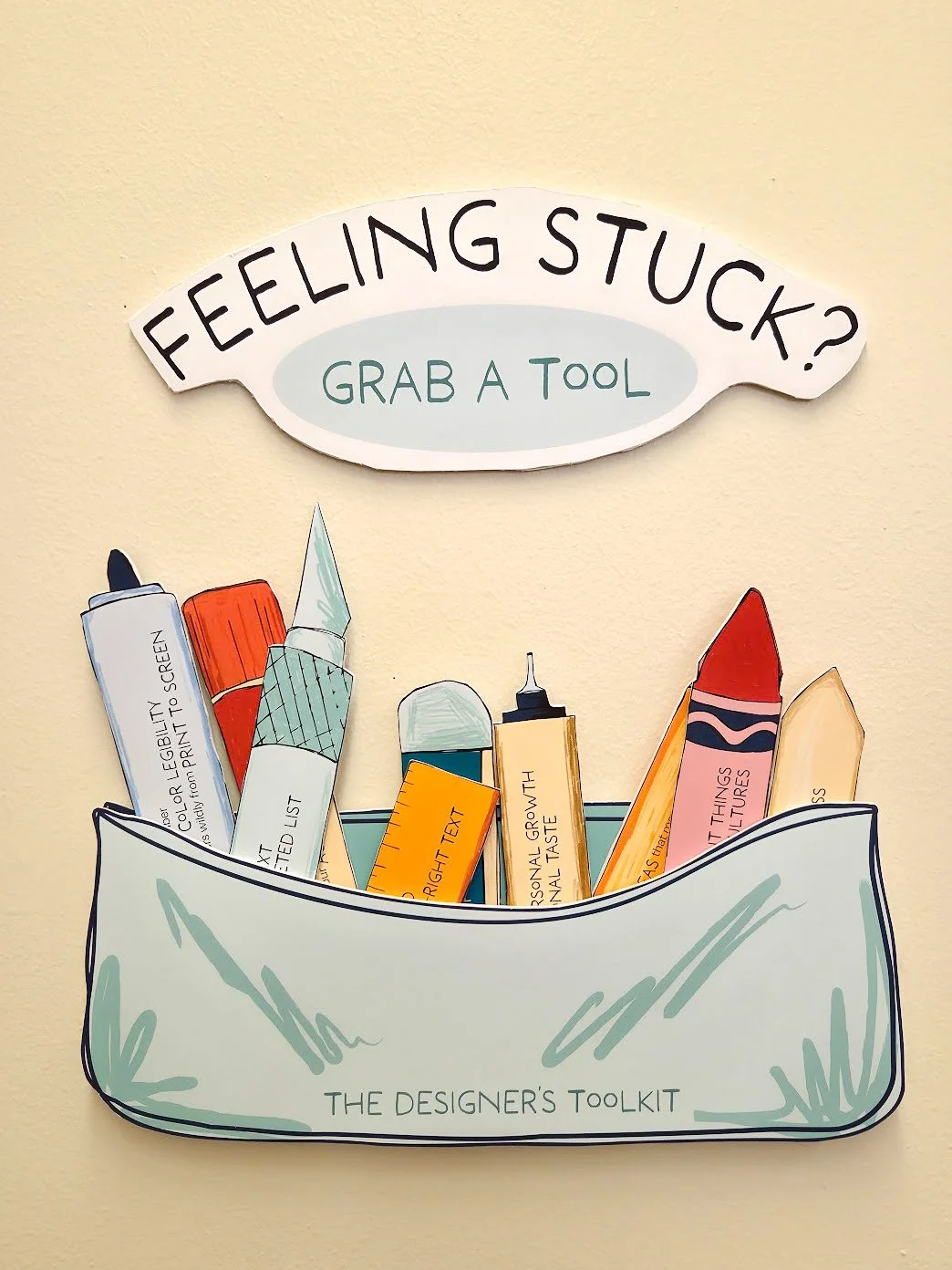
The project received support from the faculty teaching Cal Poly's second-year Graphic Design curriculum, who agreed to incorporate the nine principles into classroom instruction. Incoming students will be introduced to the Designer's Toolkit and the concepts behind each tool, preparing them to use the installation as an ongoing resource throughout their time in the program.
The Outcome
Reflection
The Designer's Toolkit challenged me to consider how educational information could become something physical, approachable, and interactive. Developing the reasoning behind each principle strengthened my ability to translate design theory into concise, accessible language, while establishing the color palette, typography, and tool selection challenged me to create a visual system that could remain cohesive across nine unique pieces. Physically constructing the installation also gave me experience taking a project beyond the digital design stage and considering scale, materials, and interaction. Most importantly, collaborating within a team of three reinforced the value of communication and shared creative direction when bringing a larger concept to life.